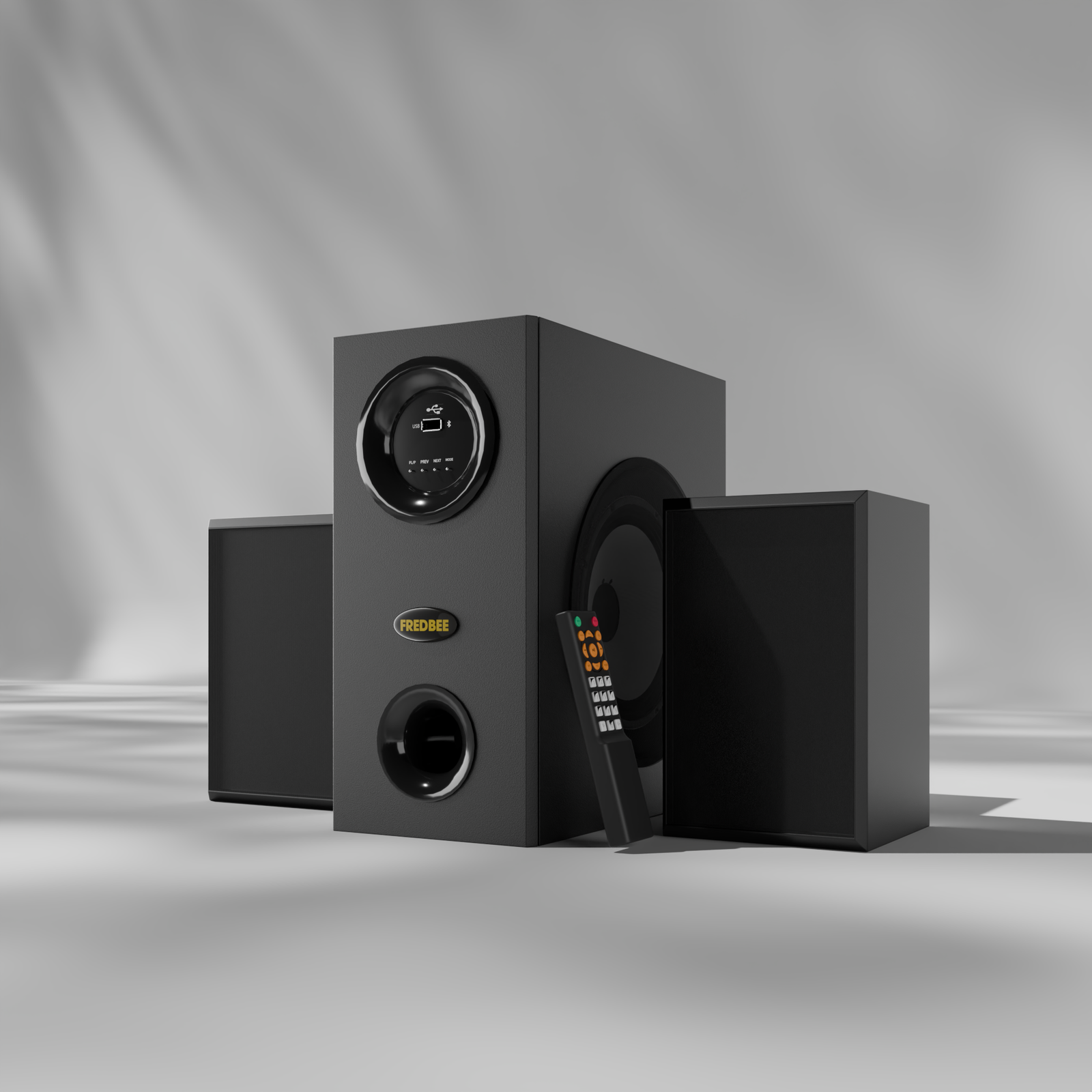
Make the product easy to understand.
Speaker products have a visual communication problem: a photograph can show the object, but a marketing team often needs much more than a single beauty shot.
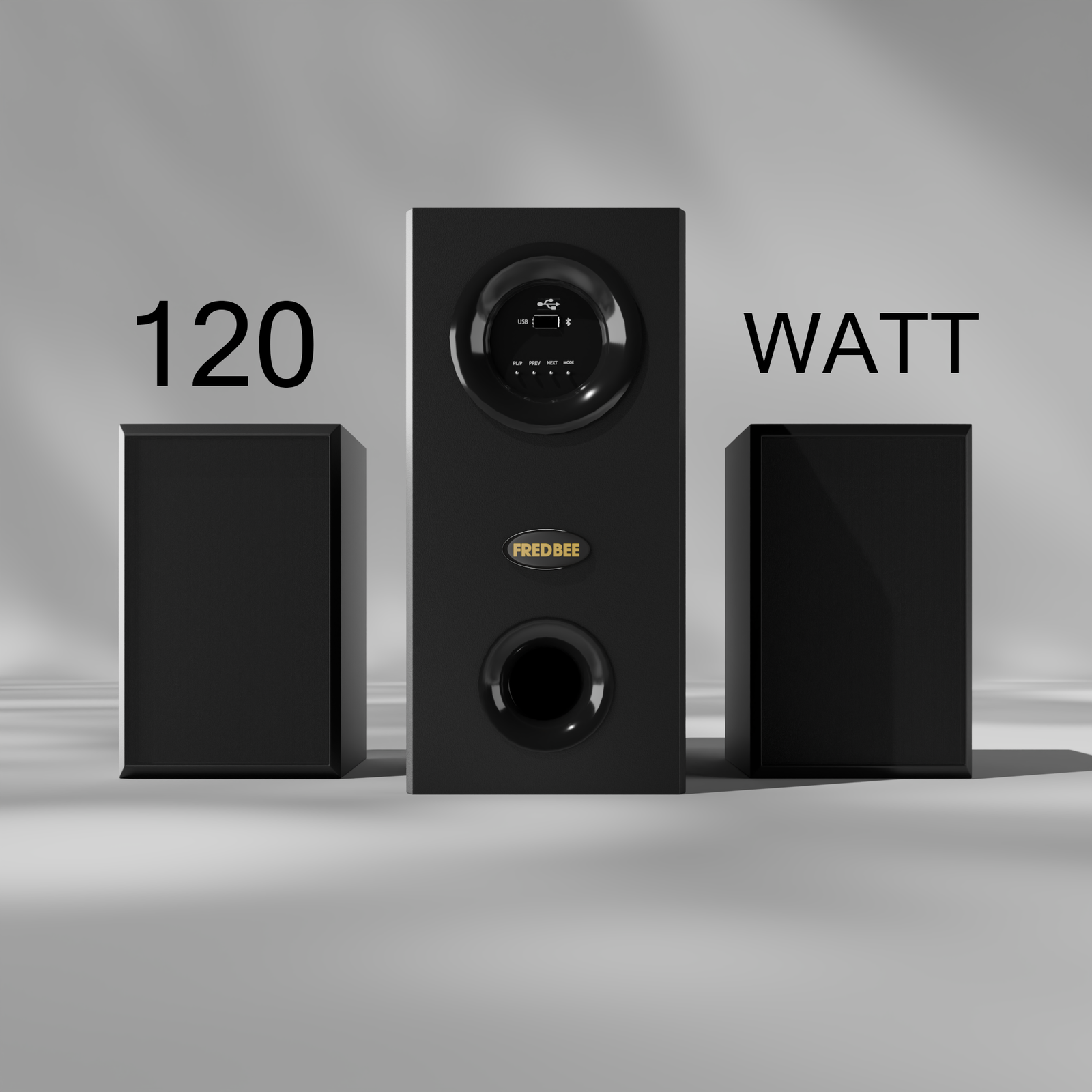
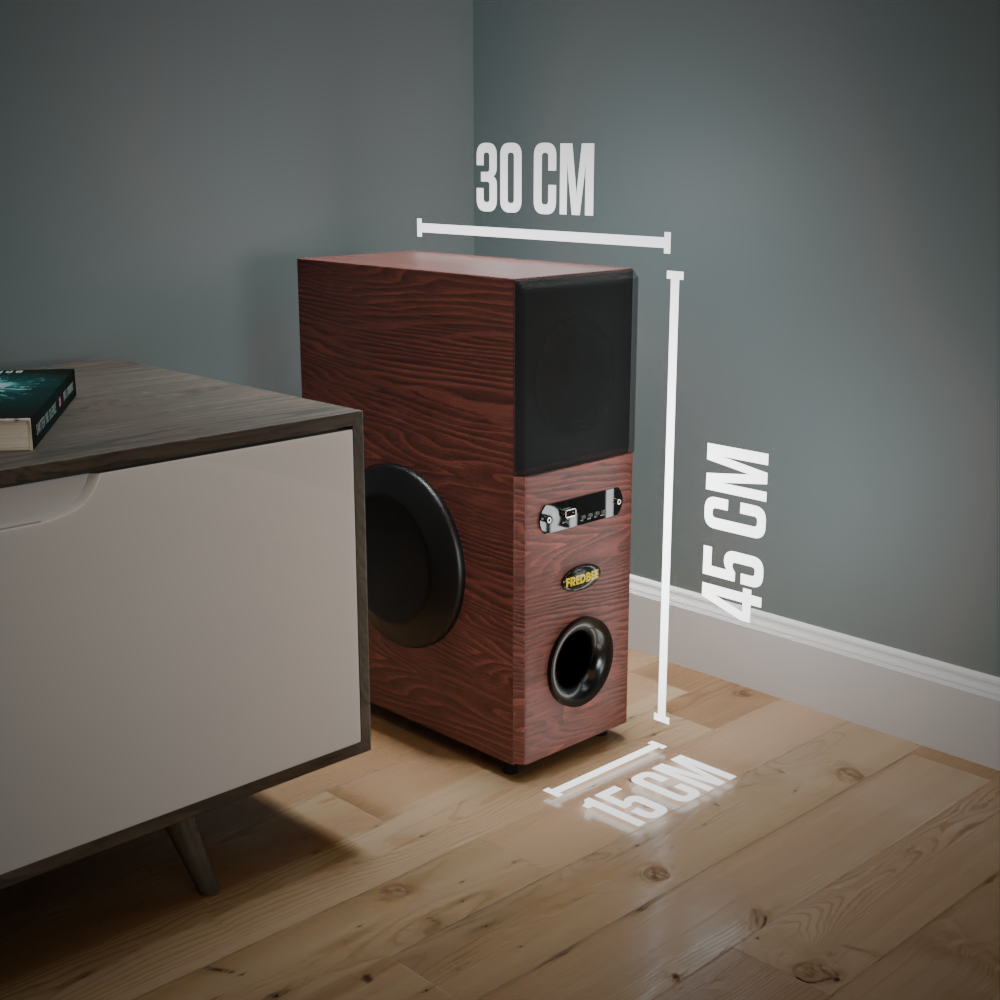
The product may need a hero image for a website, a clean front view for a catalogue, feature graphics for sales material, dimension visuals for buyers and a lifestyle scene that helps people imagine the product in use.
Instead of treating those as separate deliverables, I approached the Freedbee project as a 3D product visualization system.
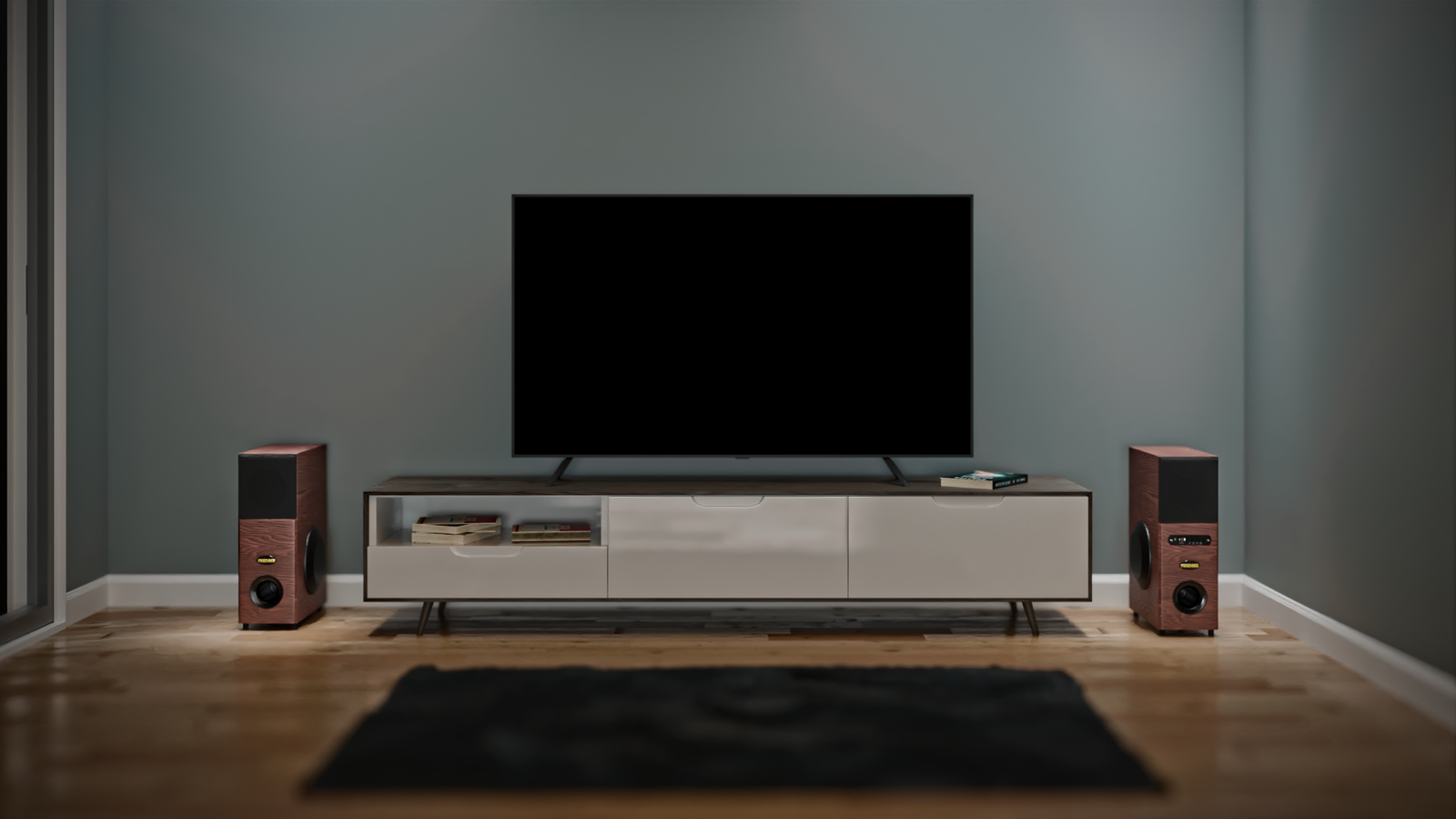
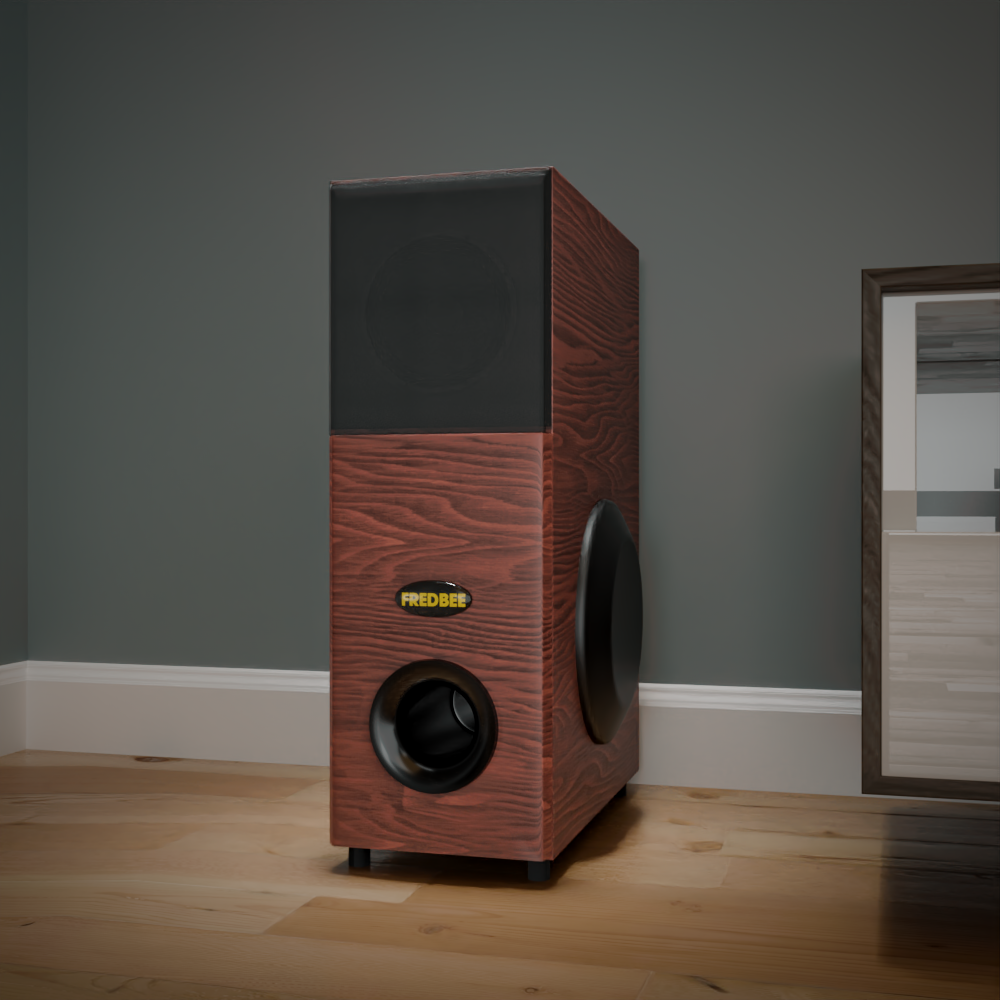
One asset. Multiple outputs.
The value of a well-built 3D model is that the same digital product can be placed into different cameras, environments and lighting setups without rebuilding the product every time.
Hero renders
Premium product compositions designed to create the first visual impression on websites, campaigns and presentations.
Feature visuals
Close-up compositions that make product specifications easier to communicate visually.
Technical views
Clean visual communication for dimensions, ports, controls and other product information.
Lifestyle CGI
Contextual scenes that help customers understand where and how the product fits into everyday use.
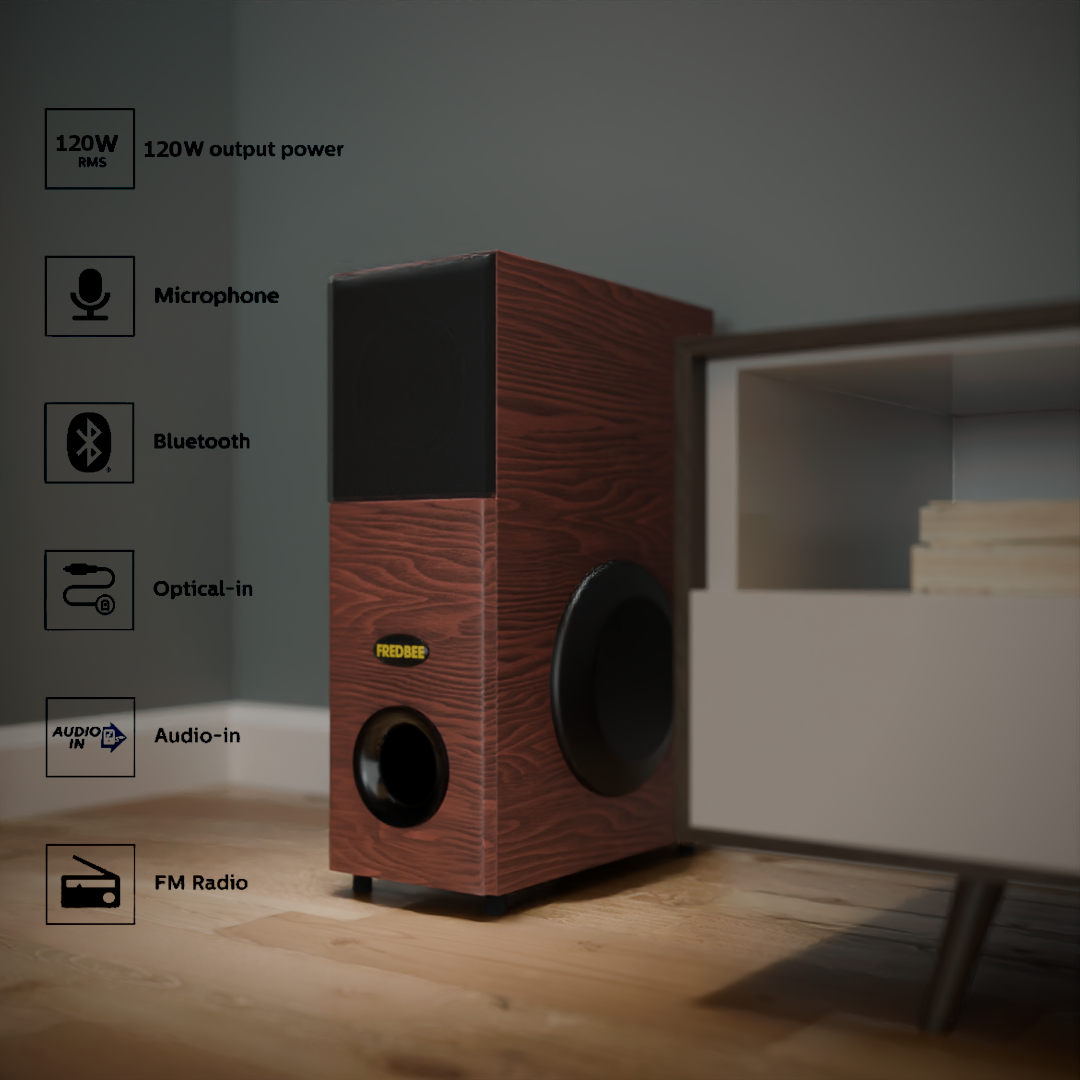
Turn specifications into visuals.
A specification is useful, but a visual can reduce the effort required to understand it. For this speaker visualization, the feature set includes 120W RMS output power, Bluetooth, microphone, optical-in, audio-in and FM radio.
Rather than placing every detail into a wall of text, CGI gives the designer control over framing, lighting, scale and visual hierarchy. That makes it possible to create focused feature shots that can be reused across product pages, brochures, sales decks, social media and campaign assets.
Show the details photography struggles with.
Technical product visualization is especially useful when a product has information that needs to be communicated precisely. A controlled 3D scene can isolate the product, keep the camera consistent and make dimensions or interfaces easier to read.
For brands selling through e-commerce, distributors or B2B channels, these visuals can become part of a repeatable product-content workflow rather than a one-off campaign image.
Build the content system before you build the campaign.
Product launches
Use the same 3D asset to create launch visuals, feature graphics, product films and presentation imagery.
E-commerce
Generate consistent angles, clean backgrounds, feature callouts and dimensions for product pages and marketplaces.
Sales & B2B
Explain technical details in a way that gives sales teams useful visuals for decks, catalogues and buyer conversations.
Campaigns
Create controlled environments, dramatic lighting and camera angles that may be difficult or expensive to produce with a physical shoot.
The real advantage is control.
High-quality 3D product rendering is not only about making an object look realistic. It gives a brand control over camera, lighting, materials, composition, environment and information hierarchy.
That control becomes valuable when a product needs to appear consistently across multiple touchpoints. Once the core asset is ready, new visuals can be planned around the same source instead of starting from zero for every request.
That is the approach I want Vortek Studio to bring to product teams: not just pretty renders, but visuals with a job to do.
If the product needs explaining, CGI can help.
A 3D workflow is particularly useful when a product needs more than a conventional product photograph: complex features, multiple variants, technical specifications, unusual camera angles, internal views, launch films or a large library of consistent marketing assets.
For consumer electronics, speakers, smart-home products, industrial products and hardware, the goal is the same: make the product easier to understand and easier to sell.
See more of the Freedbee product visualization work or explore Vortek Studio's 3D product visualization services.
3D product visualization, simply explained.
What is 3D product visualization?
It is the process of creating realistic or stylized product imagery from a digital 3D model. It can include hero renders, technical visuals, lifestyle scenes, feature callouts and animation.
Why use 3D renders for a speaker product?
Speakers often need a combination of beauty shots, feature communication, dimensions and lifestyle context. A 3D workflow makes those different views easier to control and keep visually consistent.
Can one 3D model create multiple marketing assets?
Yes. When the asset is built with reuse in mind, it can support product renders, feature images, technical visuals, campaign compositions, e-commerce content and animation.
Have a product that needs better visuals?
Launching a speaker, smart device, hardware product or consumer electronics brand? Send the product and the brief. Vortek Studio can turn it into a visual system built for marketing, sales and product communication.